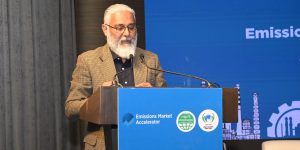
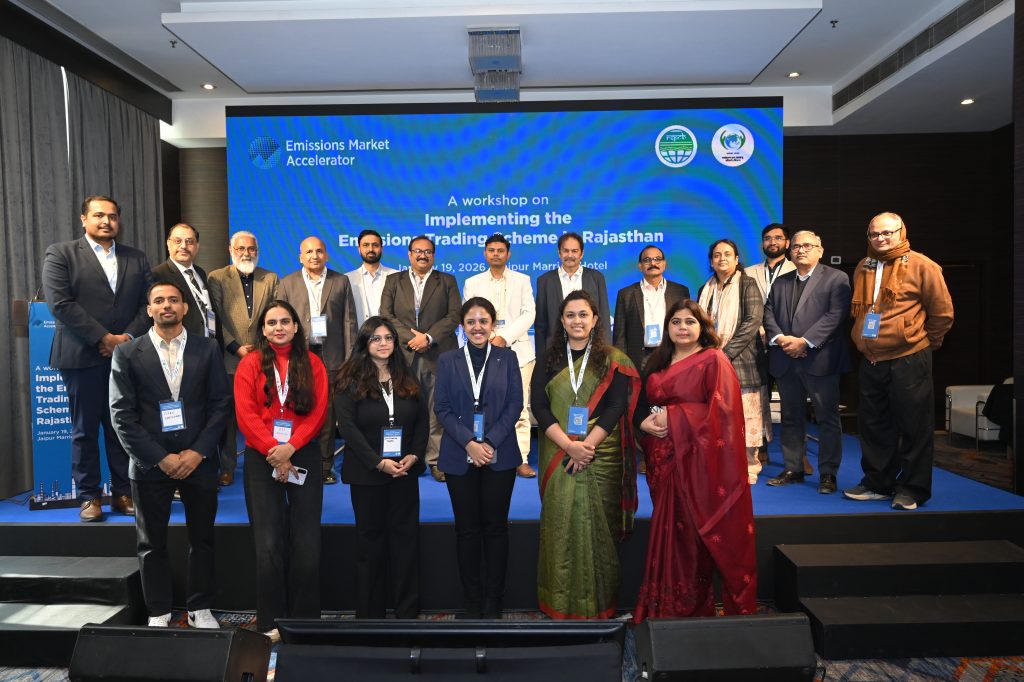
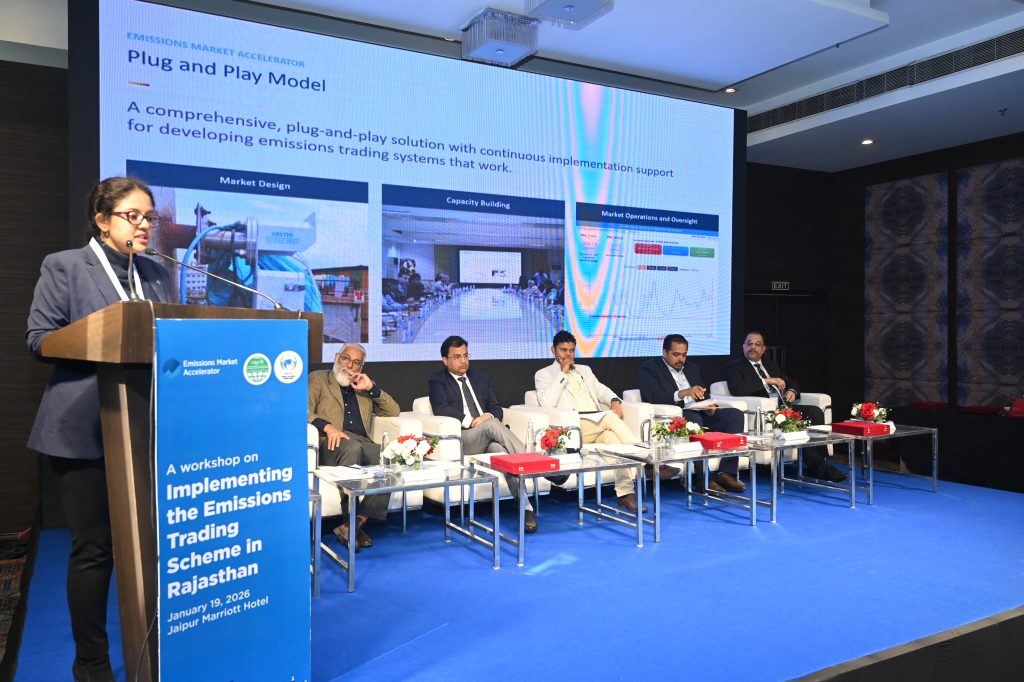
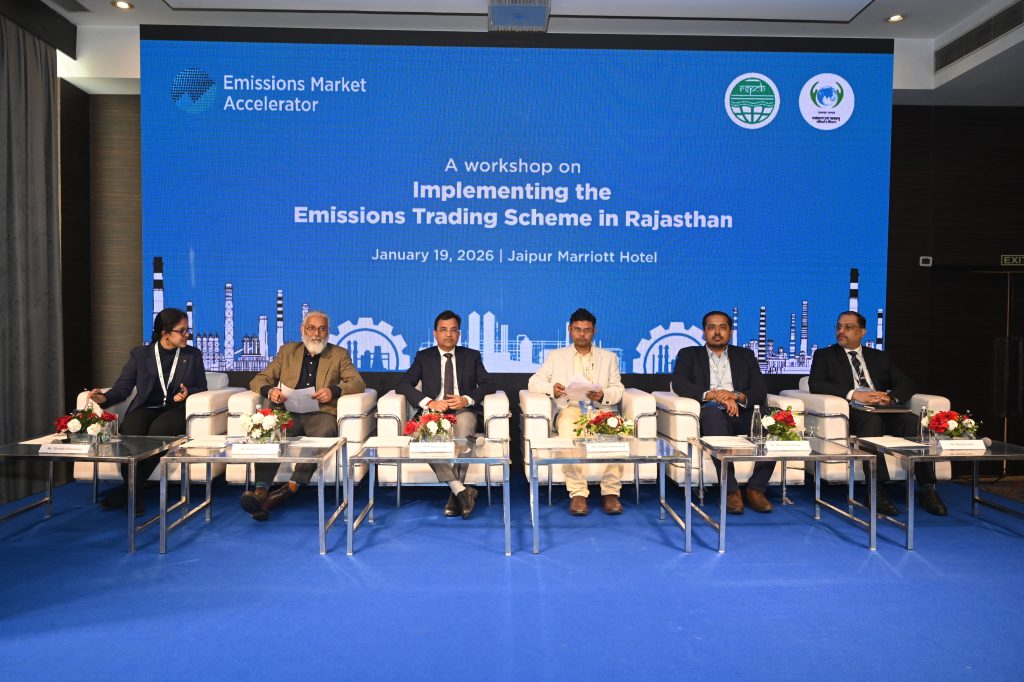
As the next step in working toward the implementation of a state-wide sulphur dioxide (SO₂) emissions trading market in Rajasthan, the Emissions Market Accelerator (EMA), in partnership with the Rajasthan State Pollution Control Board (RSPCB) and the Department of Environment and Climate Change, Government of Rajasthan, organised an inaugural workshop in Jaipur on January 19, 2026.
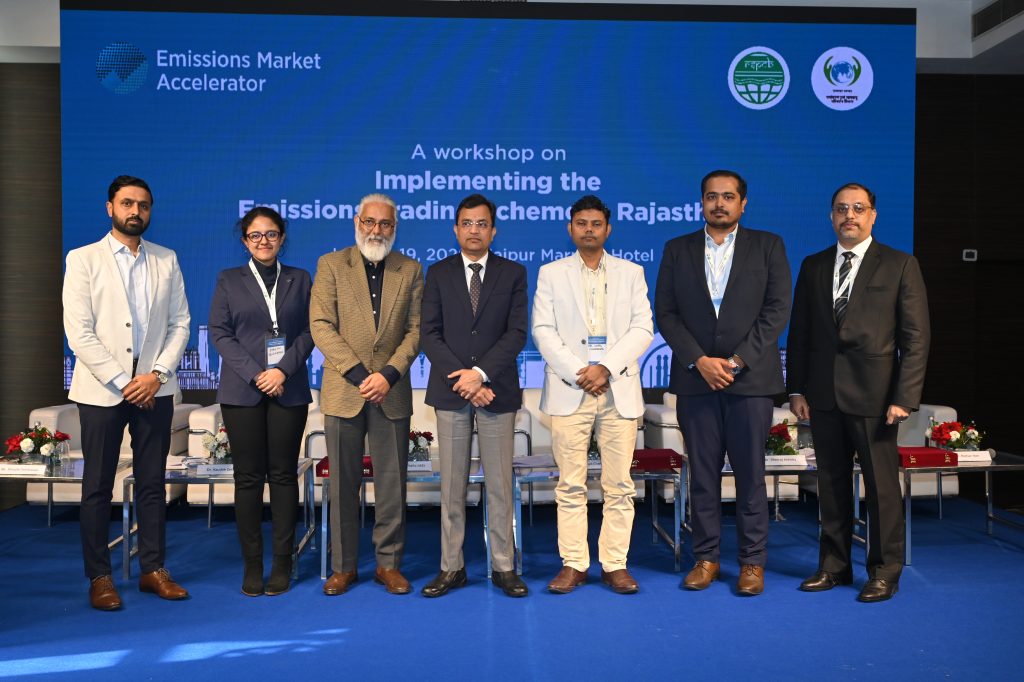
The workshop was attended by 70+ participants, including officials from all regional offices of RSPCB, representatives from State Pollution Control Boards across India, industry stakeholders, and technical partners. Designed as the first structured dialogue in Rajasthan’s ETS journey, the workshop focused on building institutional understanding, sharing inter-state experiences, and identifying the regulatory and technical building blocks required to move from planning toward implementation.
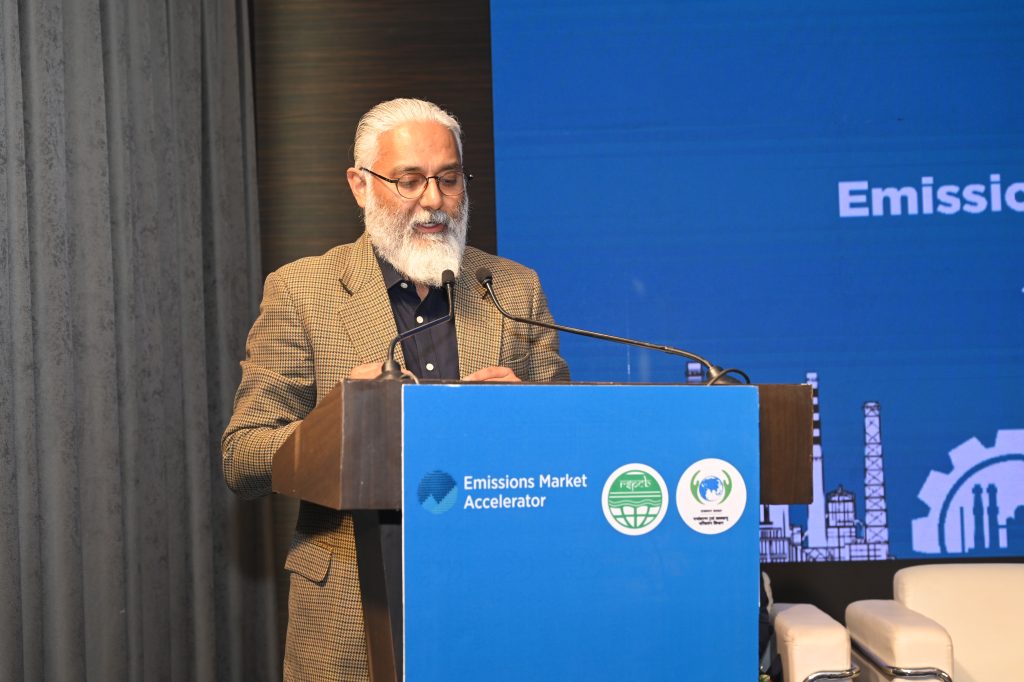
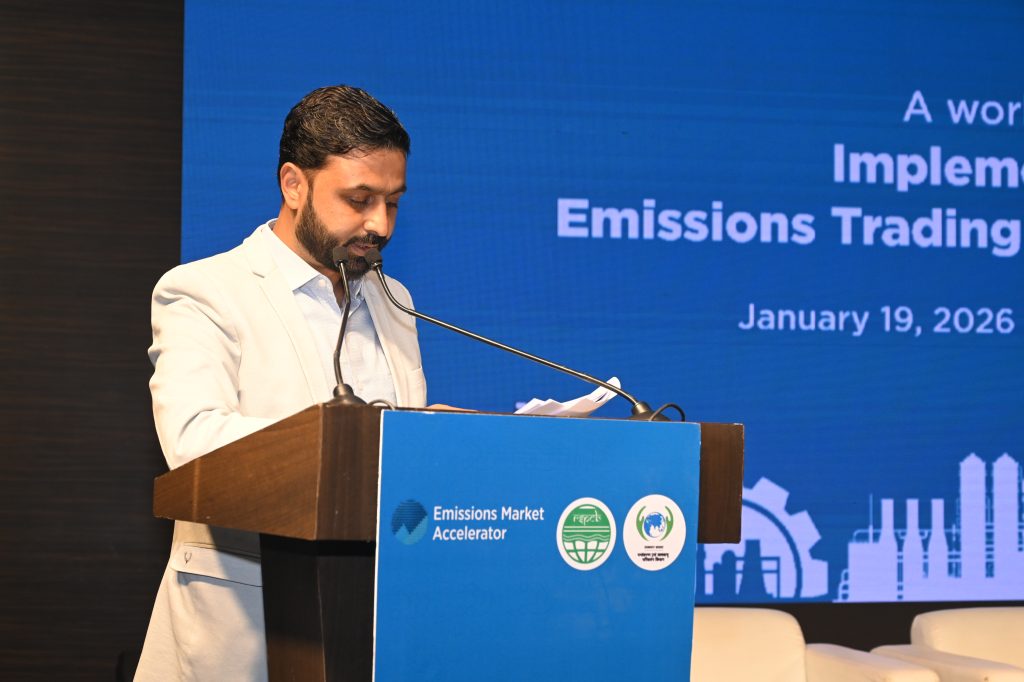
Opening the workshop, EPIC India’s Executive Director, Dr. Kaushik Deb, framed emissions trading as a tool Rajasthan can explore to strengthen environmental governance through better institutions, credible data, and well-aligned incentives. He emphasised that environmental protection and economic growth need not be in tension, noting that with the right design, emissions markets can reduce pollution while strengthening compliance and supporting industrial competitiveness. He described the workshop as an early but important step in a longer journey, intended to share lessons, ask hard questions, and draw on inter-state experience to inform how an emissions market can be designed to reflect Rajasthan’s regulatory priorities and administrative realities.
In his special address by Shri Alok Gupta (IAS), Chairperson, RSPCB, reflected the need for regulatory innovation as industrial activity expands. He emphasized emissions trading as a practical tool to strengthen enforcement, improve transparency, and balance environmental protection with economic growth. He also stressed about Rajasthan’s priorities for clean air and market-based environmental regulation, highlighting the state’s decision to move toward a state-wide sulphur dioxide emissions trading market.
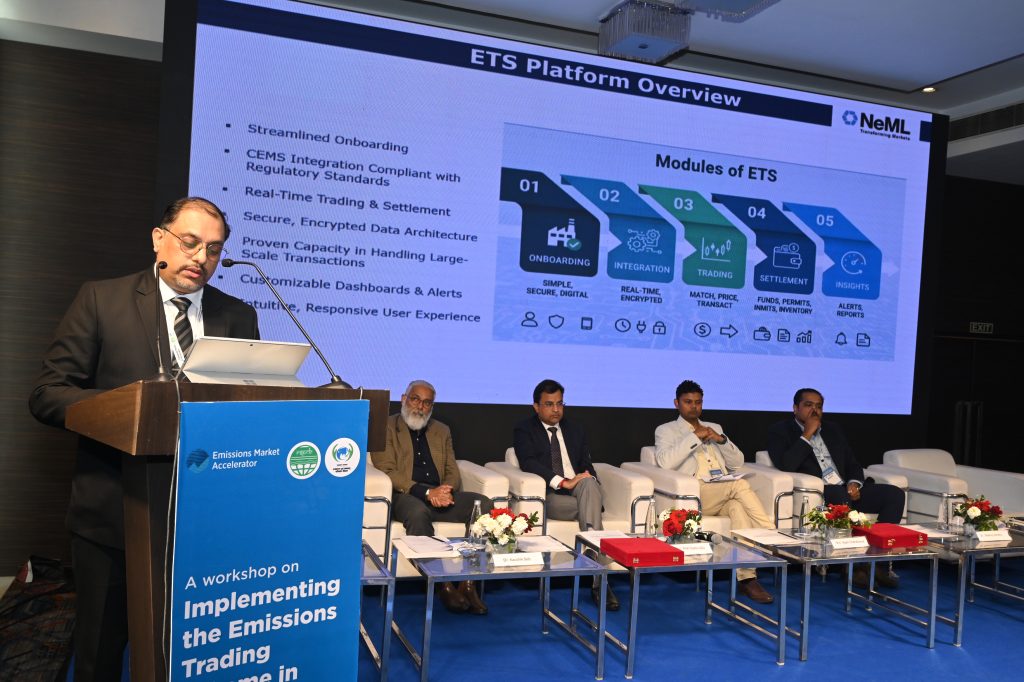
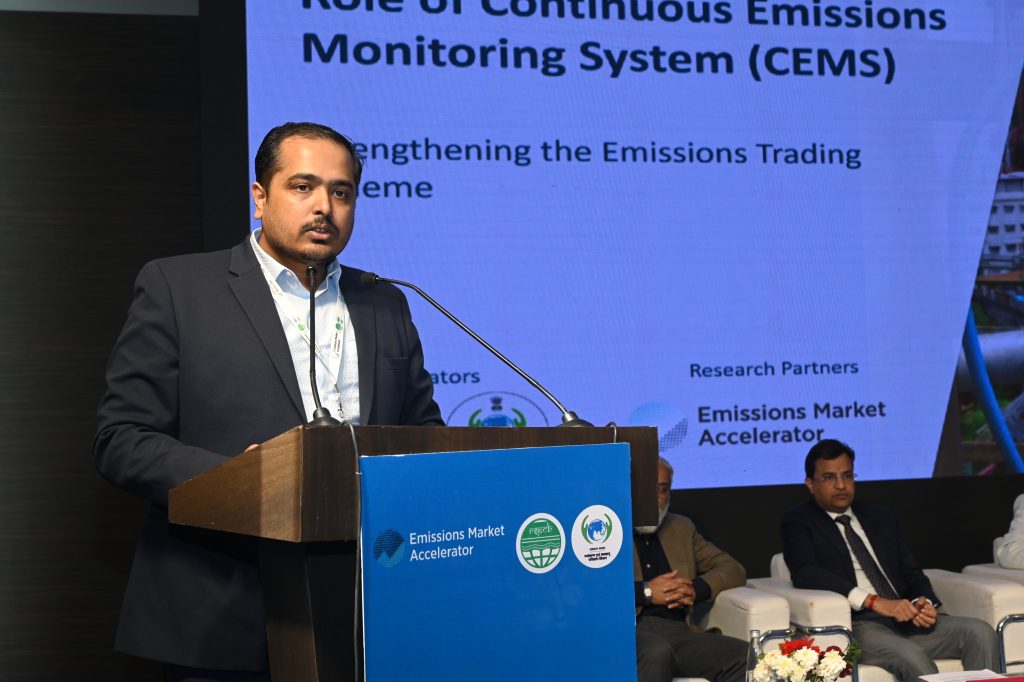
The following sessions focused on in-depth presentations on the evolution of emissions trading in India and the role of the EMA in supporting states as they move from pilots to scale; the critical importance of Continuous Emissions Monitoring Systems (CEMS) in ensuring credible, tamper-proof data for emissions trading; and the design, governance, and operational requirements of emissions trading platforms necessary to run a robust pollution market.
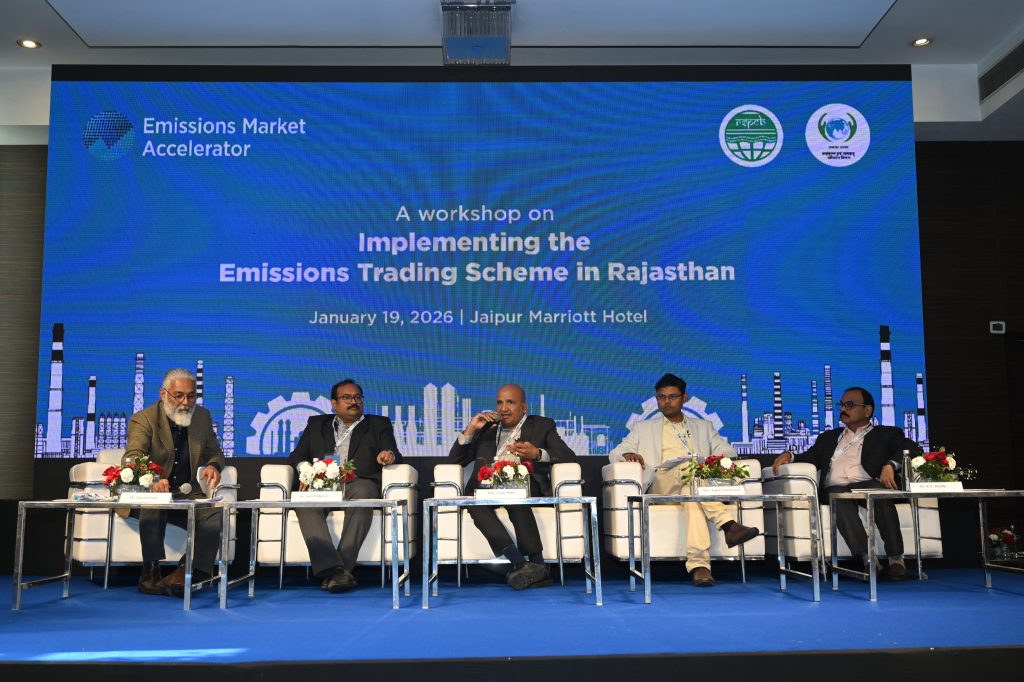
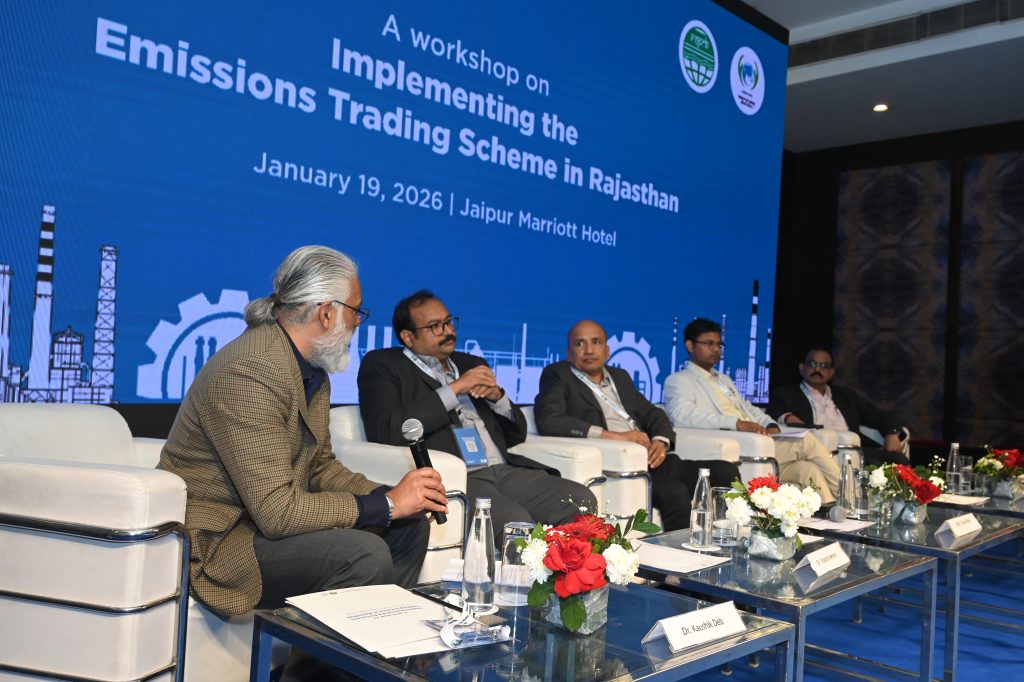
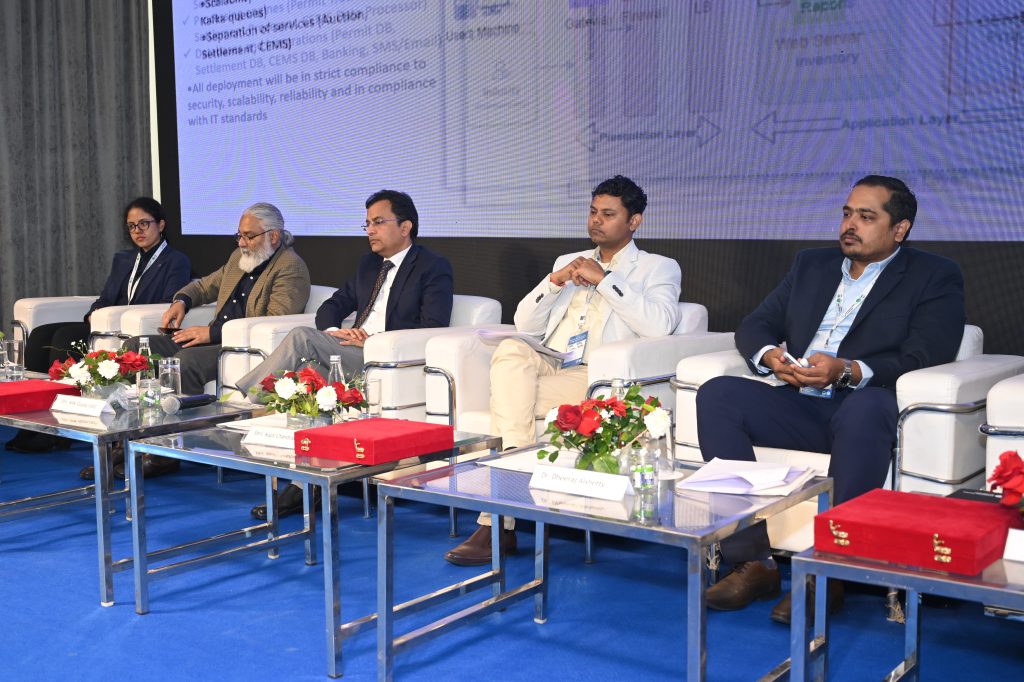
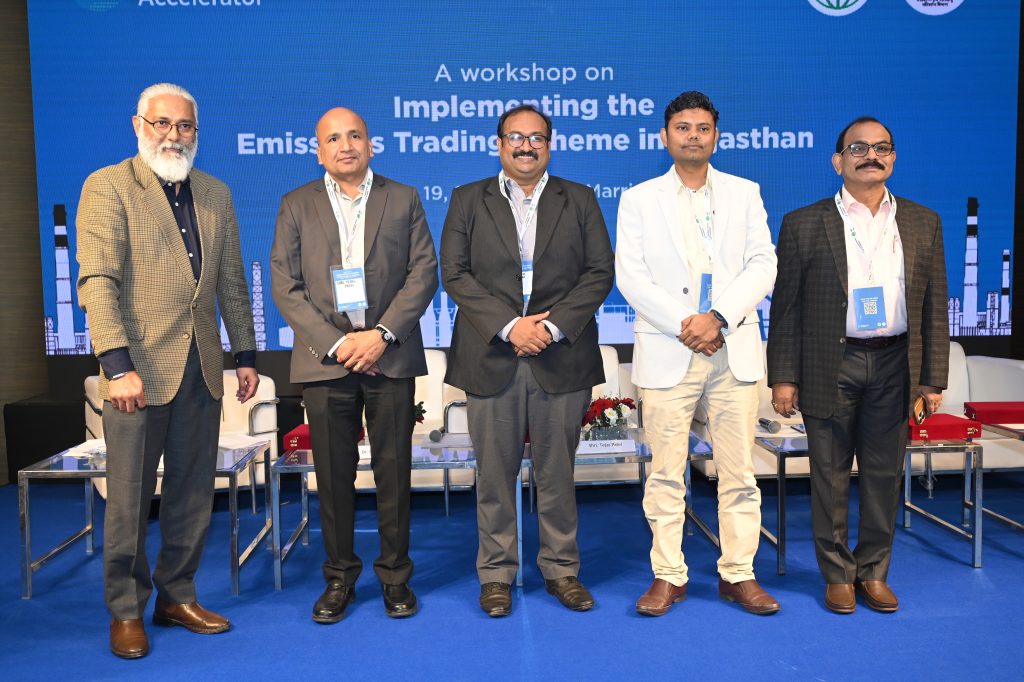
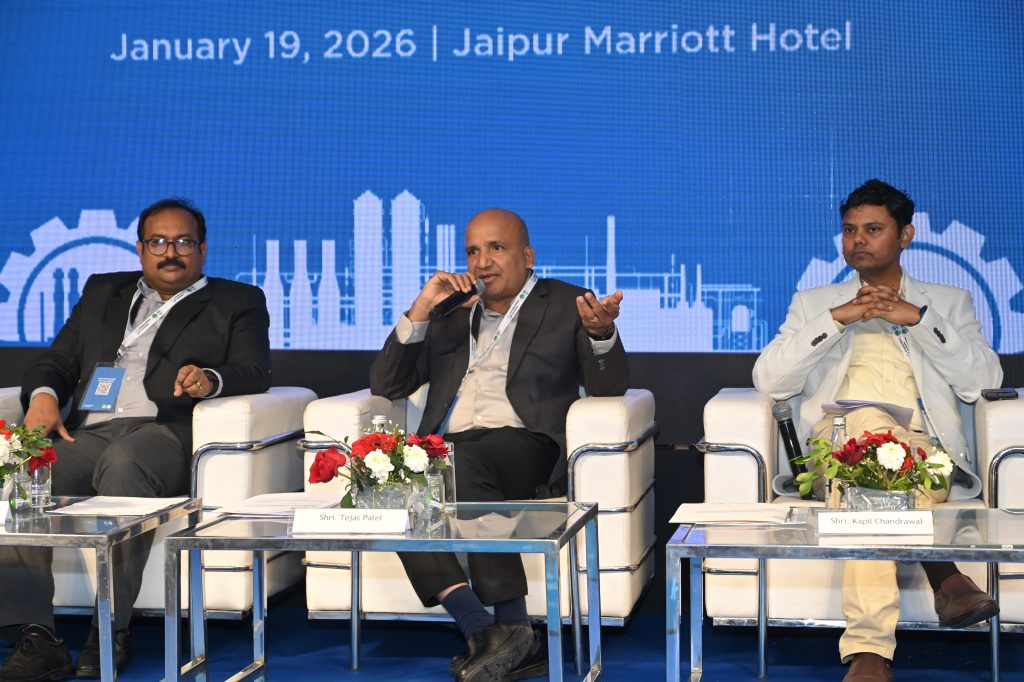
A key session of the workshop was an inter-state panel discussion that allowed Rajasthan to learn directly from the experiences of other State Pollution Control Boards and industry. The panel, moderated by Kaushik Deb, featured Shri Kapil Chandrawal, Member Secretary, Rajasthan State Pollution Control Board; Shri Ratish Menon, Member Secretary, Kerala State Pollution Control Board; Shri Tejas Patel, Chief Engineer, Gujarat Pollution Control Board; and Shri K V Reddy, Chairman, Cement Manufacturers’ Association.
The discussion reinforced that emissions markets are not one-size-fits-all and must be carefully tailored to local contexts. Panellists highlighted the importance of sequencing reforms, building regulatory capacity, engaging industry early and transparently, and investing in robust monitoring infrastructure. Challenges related to technology costs, local pollution hotspots, and enforcement integration were discussed candidly, not as barriers, but as design considerations to be addressed during the preparatory phase.
Concluding the workshop, Shri Kapil Chandrawal, Member Secretary, RSPCB, reflected on the workshop as “a starting point rather than a culmination.” He emphasised that Rajasthan is now entering a phase of learning and preparation, drawing on inter-state experiences, strengthening internal capacity, and engaging stakeholders as the state works toward operationalising a credible SO₂ ETS. Continued collaboration across states, he noted, will be critical as Rajasthan moves from planning to the next stages of readiness.
As Rajasthan works toward rolling out a state-wide sulphur dioxide emissions trading market, this inaugural workshop served a clear purpose: to set direction, build shared understanding, and establish the principles that will guide the journey ahead. The discussions in Jaipur reinforced that emissions trading is a long-term institutional endeavour which, when designed thoughtfully, has the potential to strengthen regulatory effectiveness, support industrial development, and deliver cleaner air for citizens.
DSC_2428
DSC_2420
DSC_2352
DSC_2337
DSC_2315
DSC_2520
DSC_2517
DSC_2481
DSC_2282
DSC_2273
DSC_2248
DSC_2227
DSC_2225