


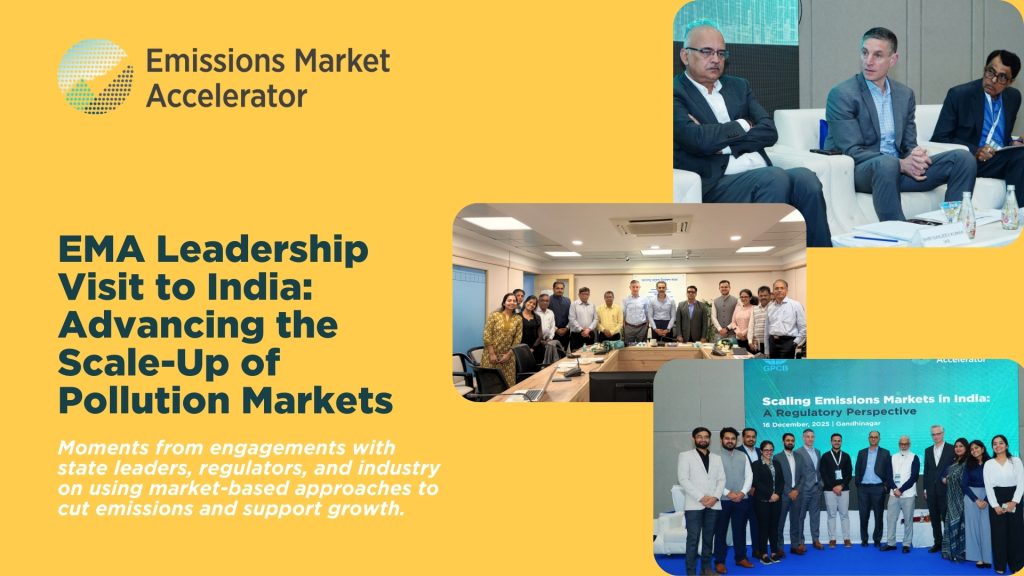
The Emissions Market Accelerator (EMA) leadership team visited India in December to deepen engagement with government partners, regulators, industry, and philanthropic stakeholders, with the shared goal of advancing the scale-up of emissions markets across the country. The visit focused on strengthening partnerships, aligning evidence with policy needs, and identifying practical pathways to expand market-based regulation in manufacturing-intensive economies.
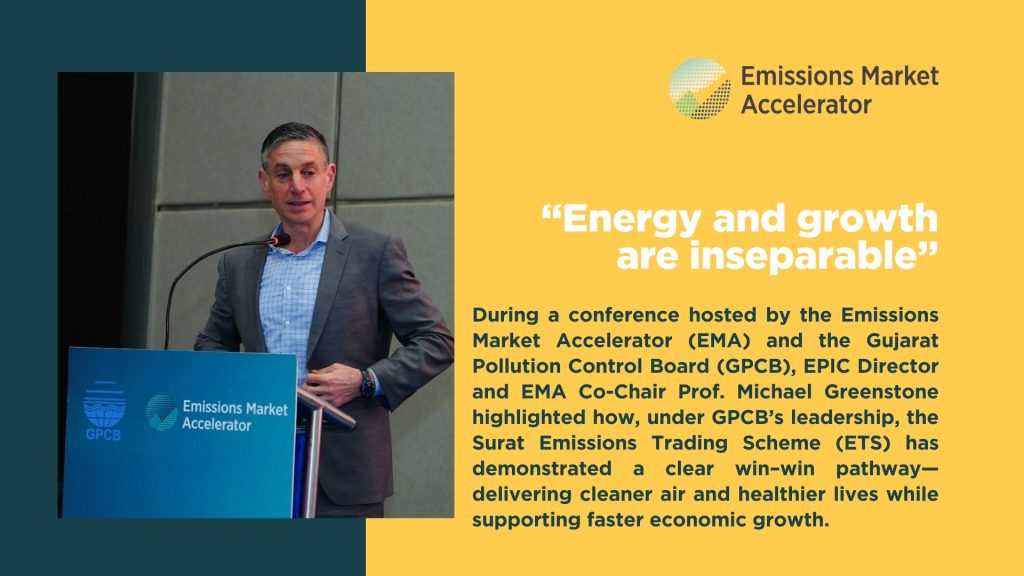
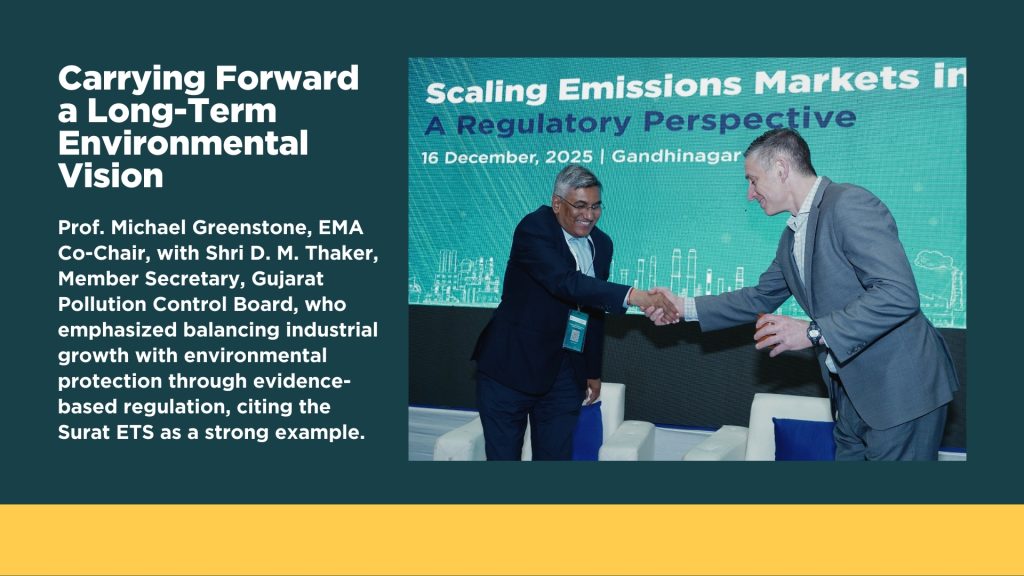
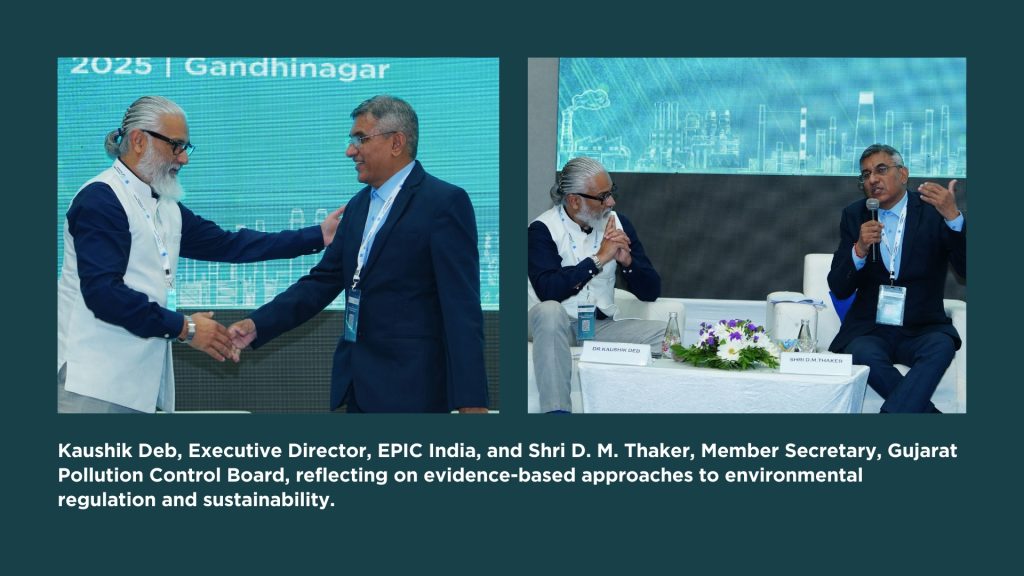
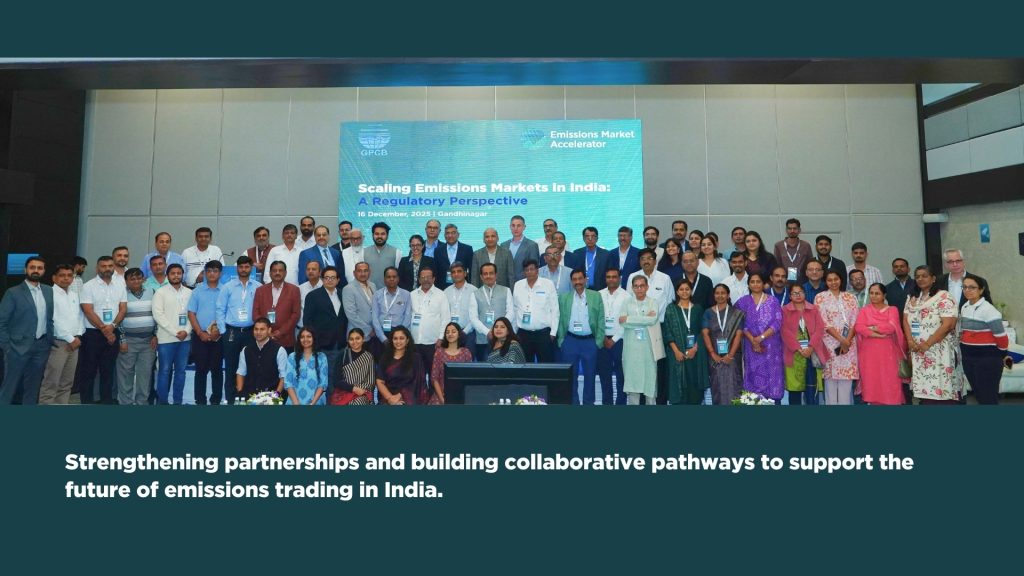
A key moment during the visit was a public conference held on 16 December in Gandhinagar, organised in partnership with the Gujarat Pollution Control Board. The convening brought together more than 100 participants, including environmental regulators from five Indian states, alongside researchers, industry representatives, and policy experts. The workshop highlighted the potential of pollution markets as a regulatory tool, drawing on lessons from Gujarat’s Emissions Trading Scheme and exploring how similar approaches could be adapted and scaled across different state contexts.
At the conference, while deliberating on the conversations, EMA Co-Chair and EPIC Director, Michael Greenstone said, “Beneath indicators like AQI and PM are real people living shorter and sicker lives.” He underscored Gujarat’s leadership in moving beyond traditional command-and-control approaches toward cleaner growth.
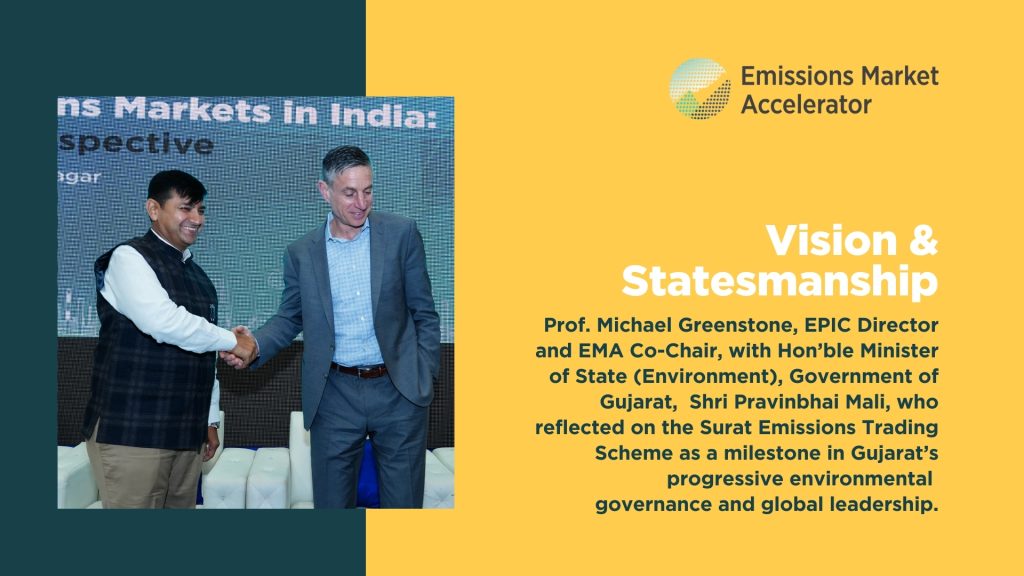
The conference was also attended by senior policymakers, including Shri Sanjeev Kumar, IAS, Principal Secretary, Forests & Environment Department, Government of Gujarat; Hon’ble Minister of State (Environment) Shri Pravinbhai Mali; and Hon’ble Cabinet Minister Shri Arjunbhai Modhwadia, who shared their insights and reaffirmed the benefits of an emissions market, citing the Surat ETS as a successful example.
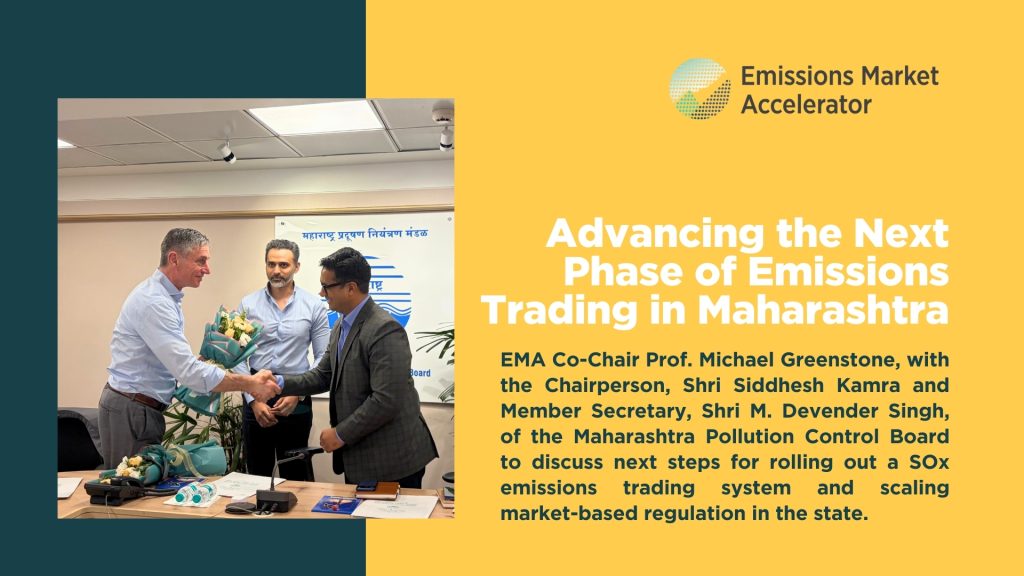
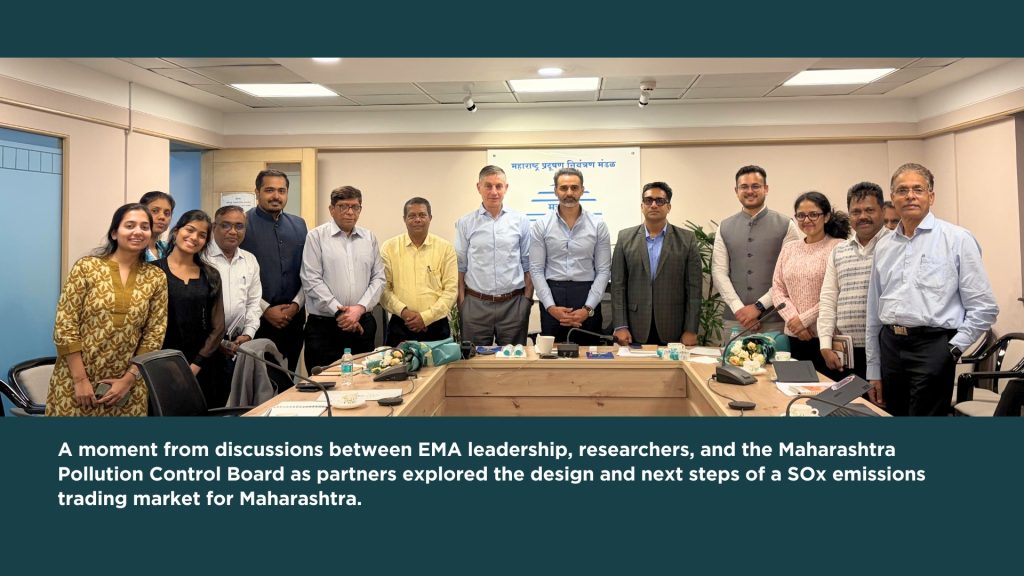
Beyond the public forum, EMA leadership held closed-door discussions with senior officials from the Gujarat Pollution Control Board and the Maharashtra Pollution Control Board. These meetings focused on strategies to expand emissions trading within states, strengthen monitoring and compliance systems, and support the evolution of emissions markets beyond pilot programmes toward sustained regulatory instruments.
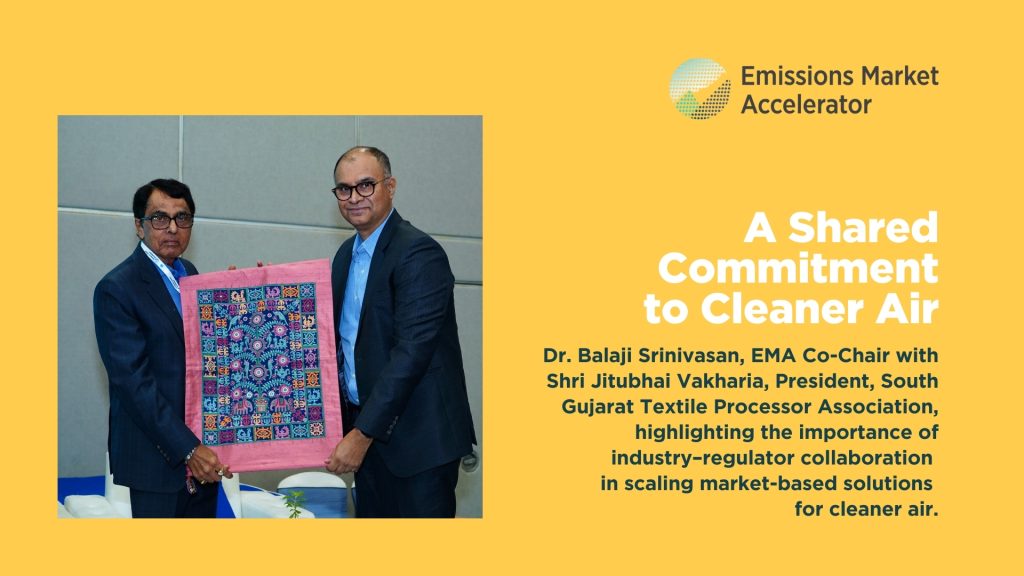
The visit also included engagements with senior representatives from industry, government, and Indian philanthropy to explore collaborative models for scaling emissions markets. Discussions underscored the importance of aligning regulatory leadership, private-sector participation, and long-term support for effective market design and implementation.
The EMA leadership visit and its engagements also featured media interactions reflecting growing national and international interest in emissions markets as a credible, evidence-based approach to improving air quality while supporting economic growth.
1
2

3
4
5
6
7
8
9
10