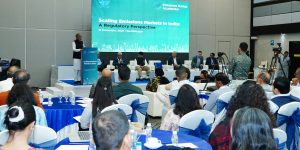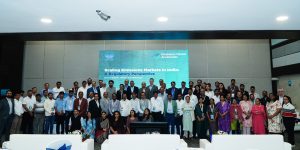

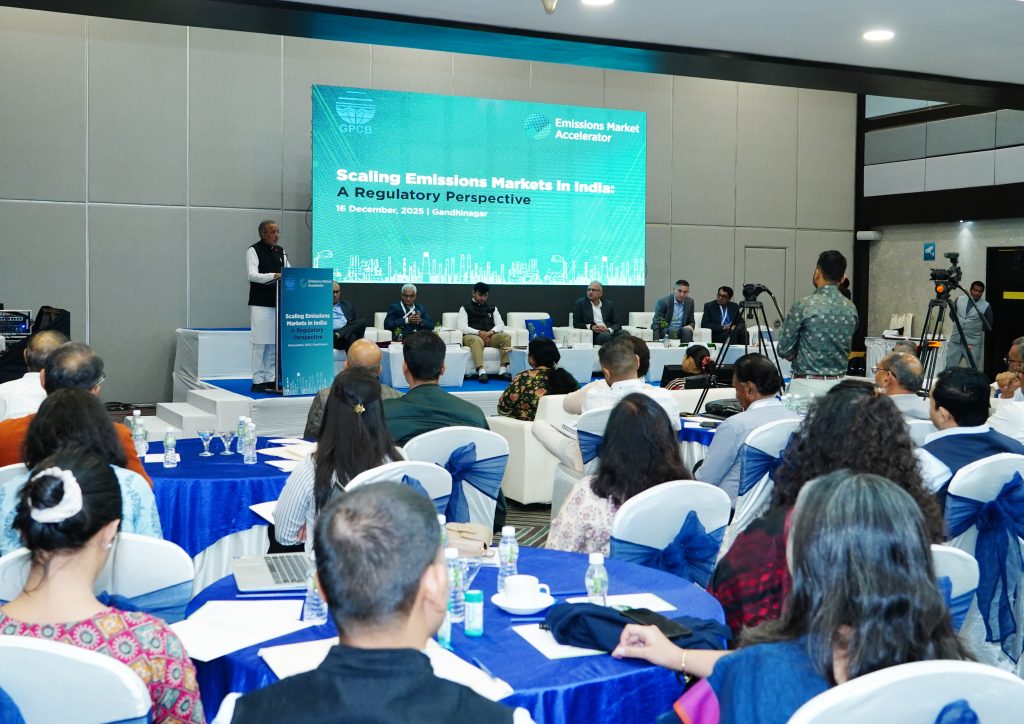
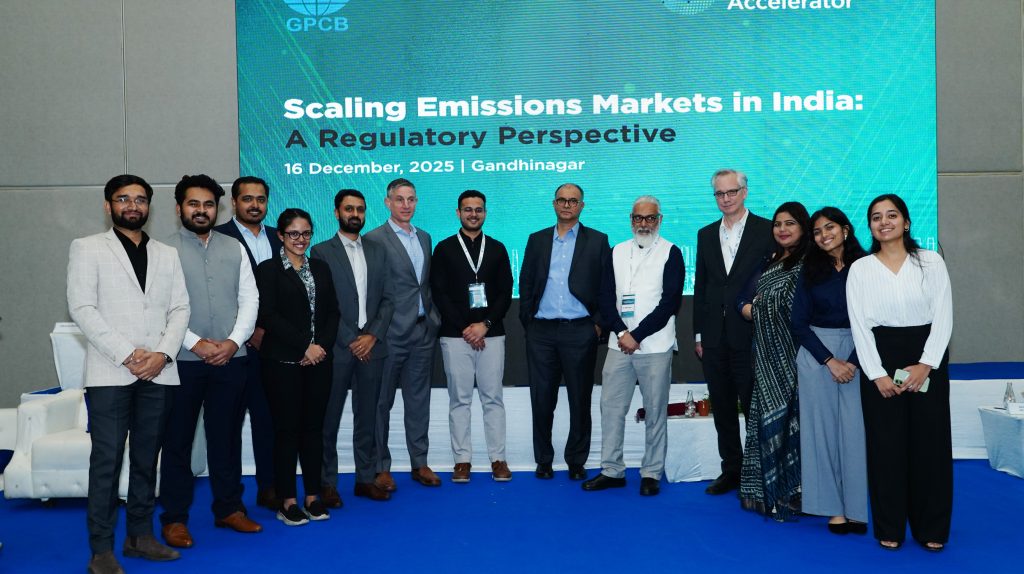
As India looks to accelerate industrial growth while meeting its clean air and climate commitments, regulators are increasingly exploring market-based approaches that complement traditional command-and-control policies. Against this backdrop, the Gujarat Pollution Control Board (GPCB), in partnership with the Emissions Market Accelerator (EMA) – a joint initiative by the Energy Policy Institute at the University of Chicago (EPIC) and The Abdul Latif Jameel Poverty Action Lab (J-PAL) convened a high-level roundtable in Gandhinagar on 16th December 2025 to examine how emissions markets can be scaled across Indian states.
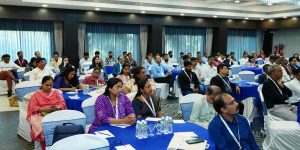
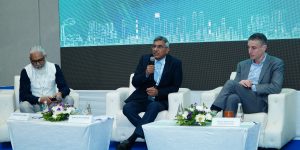
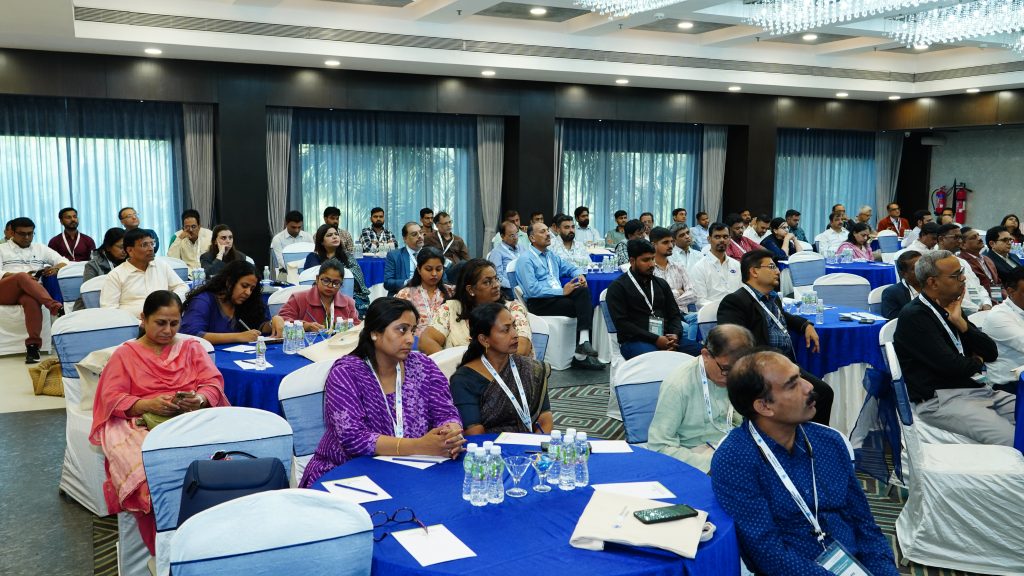
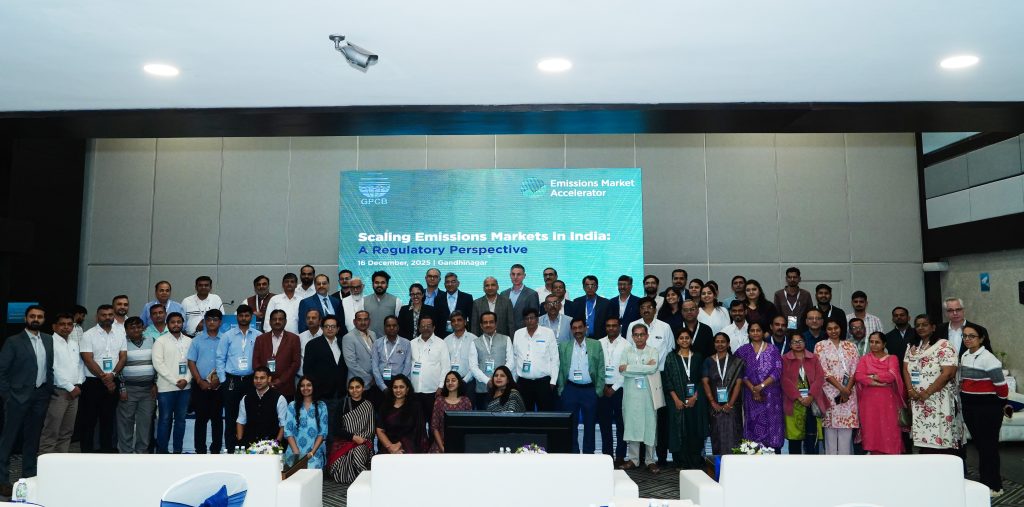
The roundtable brought together senior leadership from the Gujarat, Maharashtra, and other State Pollution Control Boards, representatives from government and industry, and global experts to reflect on Gujarat’s experience with its Emissions Trading Scheme (ETS) and to discuss pathways for adapting this model to diverse regulatory contexts. The conference was attended by 100+ participants, including representatives from government, academia, research institutions, and think tanks, among others.
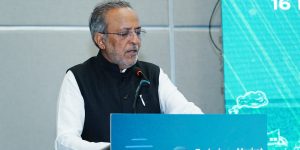
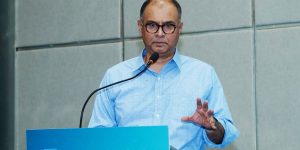
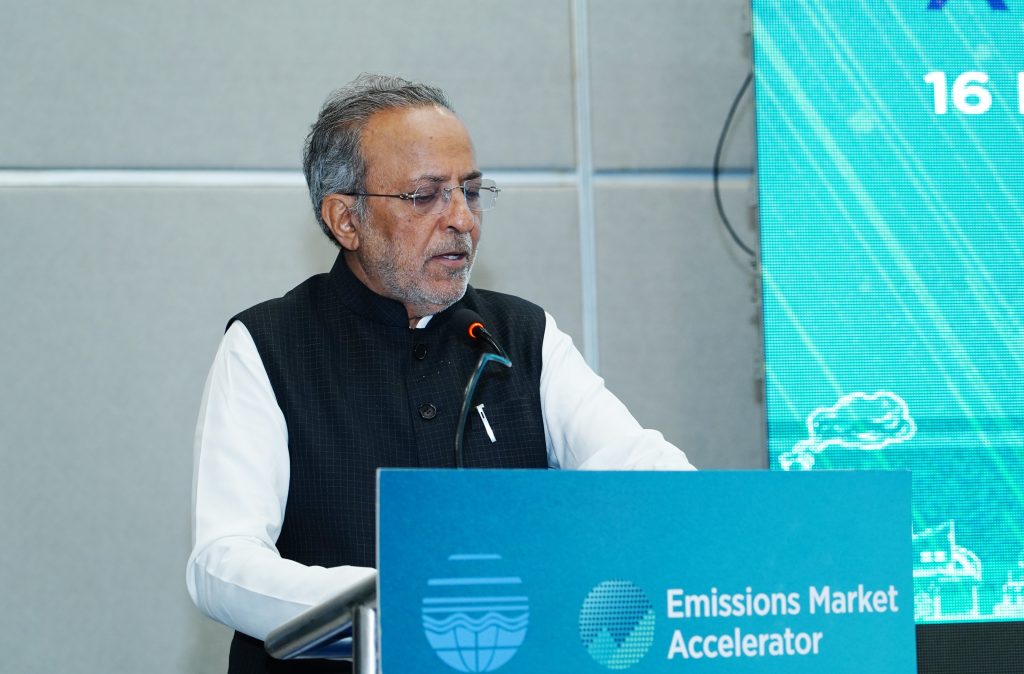
Sanjeev Kumar, IAS, Principal Secretary, Forests & Environment Department, Government of Gujarat, opened the conference by underlining Gujarat’s core regulatory principle that environmental protection and economic growth must progress together. He highlighted Gujarat’s long-standing leadership in environmental regulation, noting that the state launched the world’s first particulate matter emissions trading scheme in Surat in 2019.
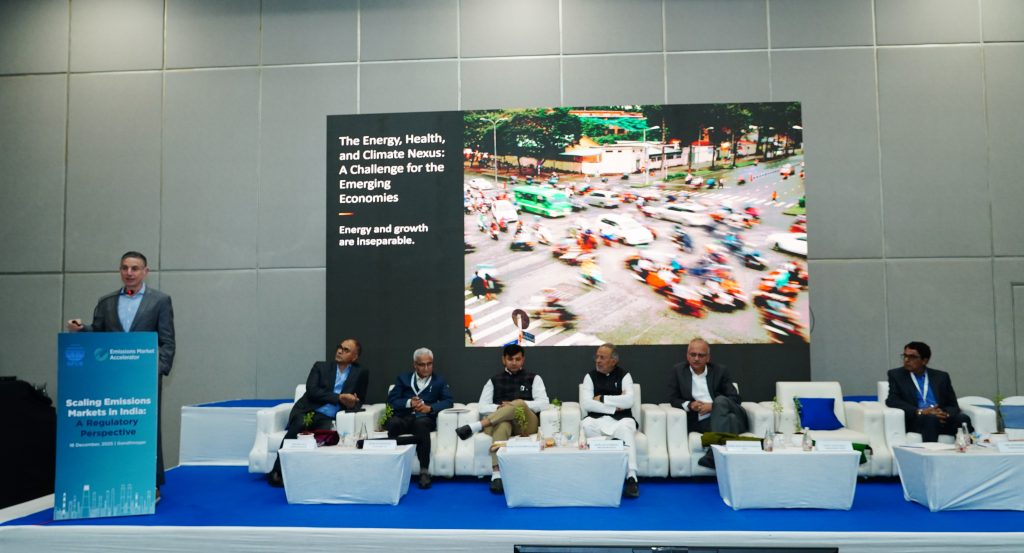
Tracing the journey from Gujarat’s ETS to the EMA, EPIC Director and EMA Co-Chair Prof. Michael Greenstone highlighted how rigorous evidence from Surat helped translate a pilot into a scalable regulatory model. He underscored a core insight from Gujarat’s experience: energy and economic growth are inseparable. Under the leadership of the GPCB, the Surat ETS demonstrated a clear win-win pathway, delivering cleaner air and healthier lives while supporting faster economic growth.
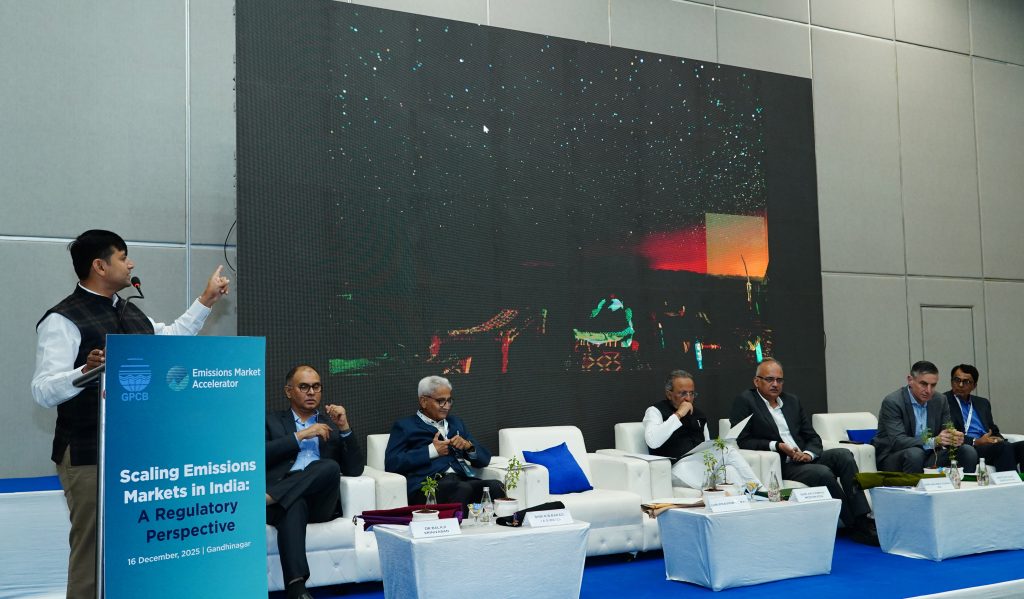
In his special remarks, Hon’ble Minister of State (Environment) Shri Pravinbhai Mali reflected on the Surat ETS as a marker of progressive thinking and an example of the global leadership Gujarat can demonstrate in environmental governance. He stated that the particulate matter ETS is a pragmatic regulatory tool, flexible for industry, strong on outcomes, and grounded in long-term public welfare.
In his remarks, Hon’ble Cabinet Minister Shri Arjunbhai Modhwadia highlighted how industry participation was equally critical in the success of the Surat ETS. He said, “From Surat to Ahmedabad, and soon to other parts of the country, the ETS reflects how Gujarat continues to lead India’s clean energy and environmental governance journey.”
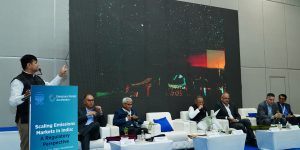
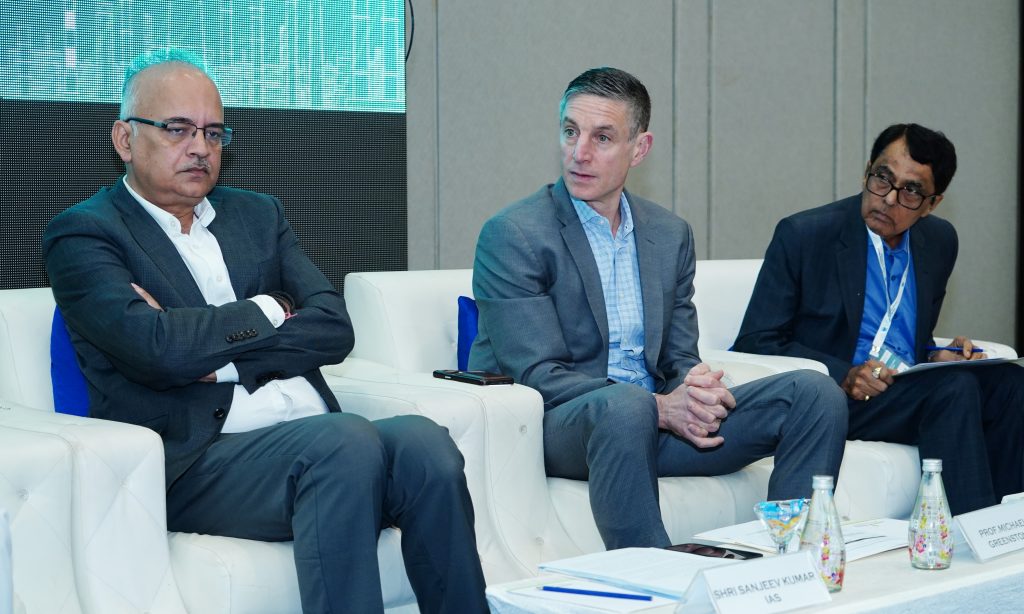
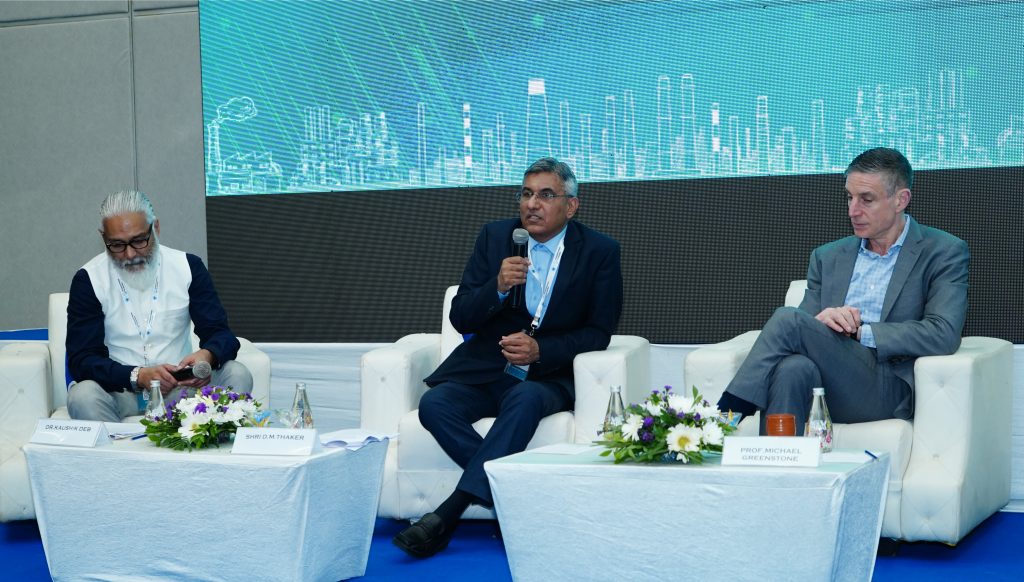
The core of the convening was a roundtable discussion moderated by Kaushik Deb, Executive Director, EPIC India, which discussed a critical question: as economies grow, environmental quality often worsens before it improves can India become the first country to break this cycle?
Shri D. M. Thaker, Member Secretary, Gujarat Pollution Control Board, reflected on the core governance challenge of balancing industrial growth with environmental protection, pointing to the Surat ETS as a strong example of achieving sustainable, evidence-based regulation.
Emphasising the human cost behind air quality metrics, Prof. Michael Greenstone, Co-Chair, EMA, noted that beneath indicators like AQI and PM are real people living shorter and sicker lives. He praised Gujarat’s leadership in moving beyond traditional command-and-control approaches toward cleaner growth.
Sharing insights from another major industrial state, Shri V M Motghare, Joint Director (Air), Maharashtra Pollution Control Board, spoke about Maharashtra’s steps toward adopting market-based approaches for pollution regulation as the state moves from policy design to implementation.
From the industry’s perspective, Shri Binay Agarwal, Vice President, South Gujarat Textile Processors Association, highlighted how the introduction of continuous emissions monitoring systems has given industries clarity on their emissions performance. Drawing on the Surat ETS experience, he noted that well-designed regulation has helped industries save costs and grow while remaining compliant.
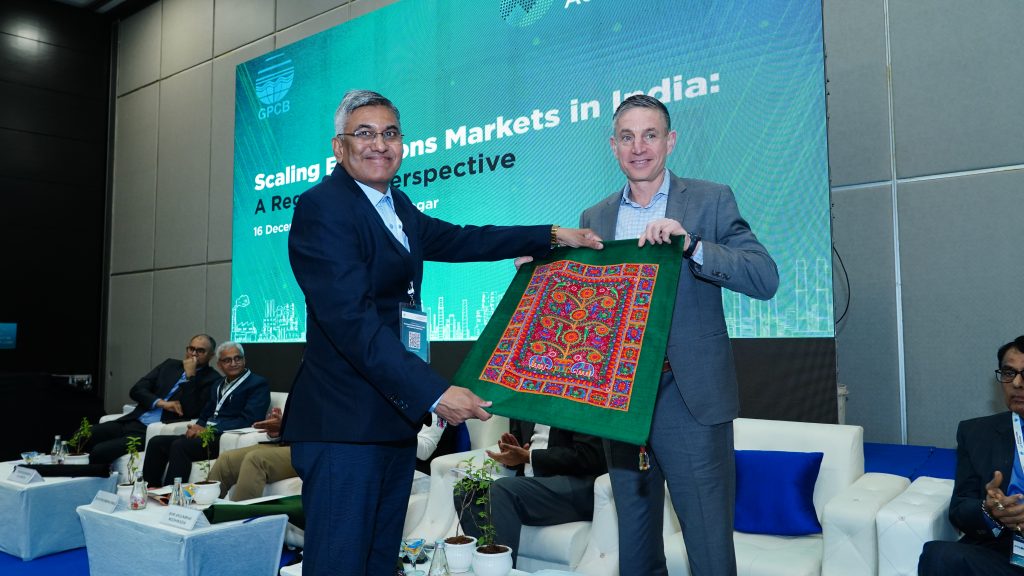
Bringing the high-level conference to a close, Bala Srinivasan, Co-chair- EMA, said, “What began in Gujarat has become a global reference point for how modern regulation can work in manufacturing-intensive economies across the Global South. Its success shows that effective regulation is built through strong partnerships between regulators, researchers, and industry. That partnership-driven approach defines the Emissions Market Accelerator, as we support governments from early scoping to full market operations, translating policy goals into functioning pollution markets.”
The discussion concluded with a shared recognition that data, cooperation, and well-designed emissions markets can enable India to align cleaner air with sustained economic growth.
DSC04704
DSC04750
DSC04805
DSC04828
DSC04915
DSC04925
DSC04941
DSC05040
DSC05146
DSC05159
WhatsApp Image 2025-12-16 at 13.44.04