


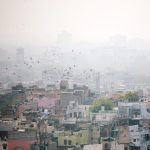


Early this month, while New Delhi struggled with severe air pollution, Chinese embassy spokesperson Yu Jing took to X to compare the air pollution crises in both countries, and offered to share Beijing’s experience in improving its air quality. The post’s context was the annual episode of north Indian skies turning sickly yellow, which sparked rare protests by citizens of Delhi this year.
Just over a decade ago, China was in the same boat. Its megacities Beijing and Shanghai regularly had PM2.5 levels more than 10-20 times the safe level recommended by the World Health Organization (WHO). PM2.5 is fine particulate matter that can penetrate the lung barrier and enter the blood system. The WHO says its average annual level in the air shouldn’t exceed 5 micrograms per cubic metre (μg/m3).
Public anger was mounting. Beijing’s crisis was linked to rapid industry growth, relaxed environmental regulations, and an energy-intensive growth model that relied heavily on infrastructure, according to Calvin Quek of Smith School of Enterprise and Environment at Oxford University.
A pivotal moment came in 2013, when China unveiled a national action plan, regarded as the toughest in its history. What followed were tightened environmental rules, curbs on vehicles in major cities, binding PM2.5 reduction targets on local governments, nationwide air monitoring stations, and clampdown on coal and other high-polluting industries.
CLEAN SWEEP
The results were stunning. China slashed PM2.5 levels by 41% from 2014 to 2023, according to the Energy Policy Institute at University of Chicago (EPIC). The improvement left South Asia largely alone as the most polluted region on earth. In 2023, China’s average PM2.5 level was 27.4 μg/m3, still above the global average, but remarkable nonetheless.
The contrast with India couldn’t be starker. While residents of Beijing spent 20% of their time last year with PM2.5 levels over 10 times the WHO limit, this share was 60% for residents of New Delhi, according to the latest World Air Quality Report by IQAir, a Swiss air-quality tech firm. “Despite governmental measures such as the National Clean Air Programme (NCAP) aiming to reduce pollution levels, challenges persist due to inconsistent policy implementation and inadequate infrastructure,” it said.